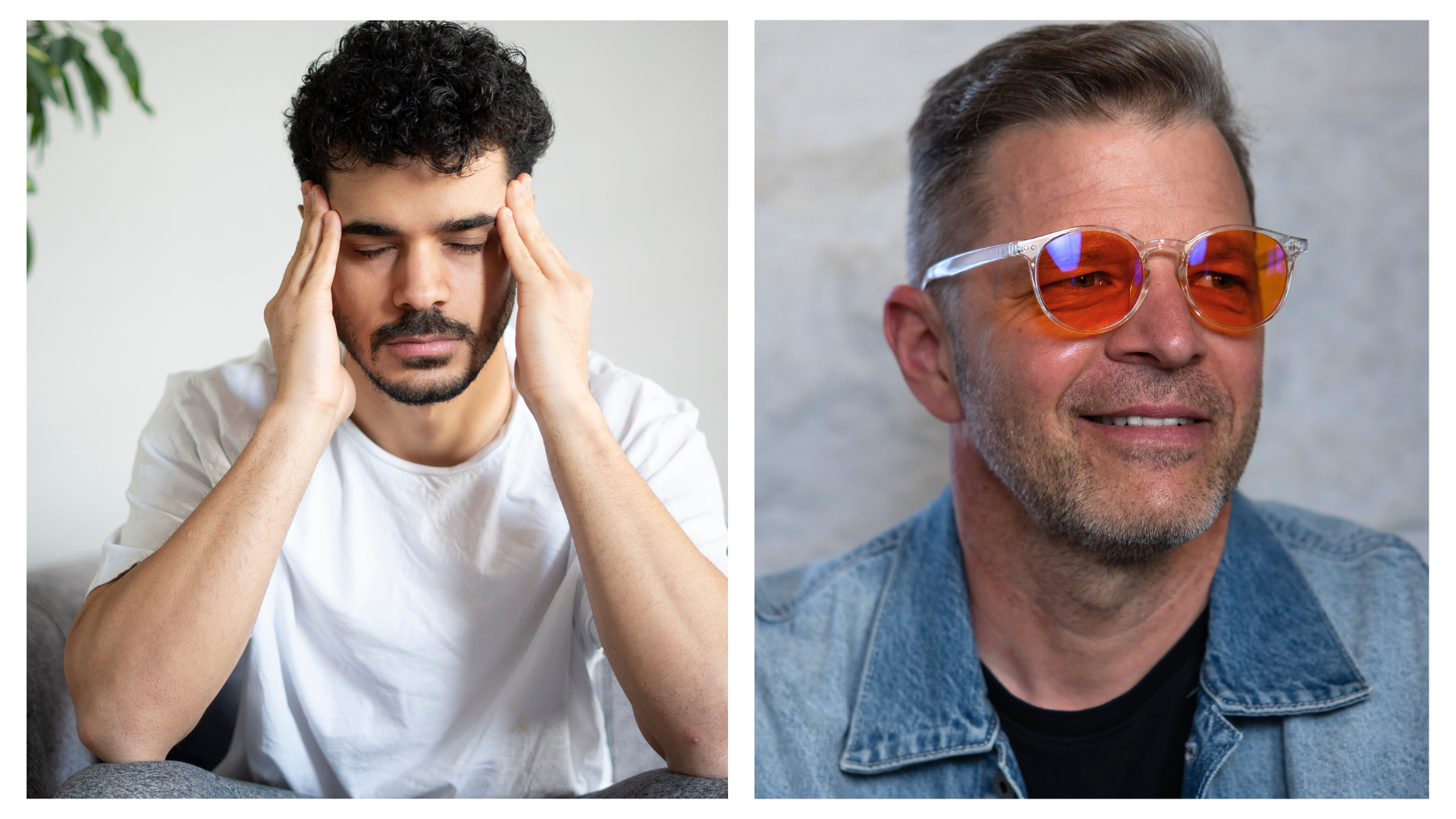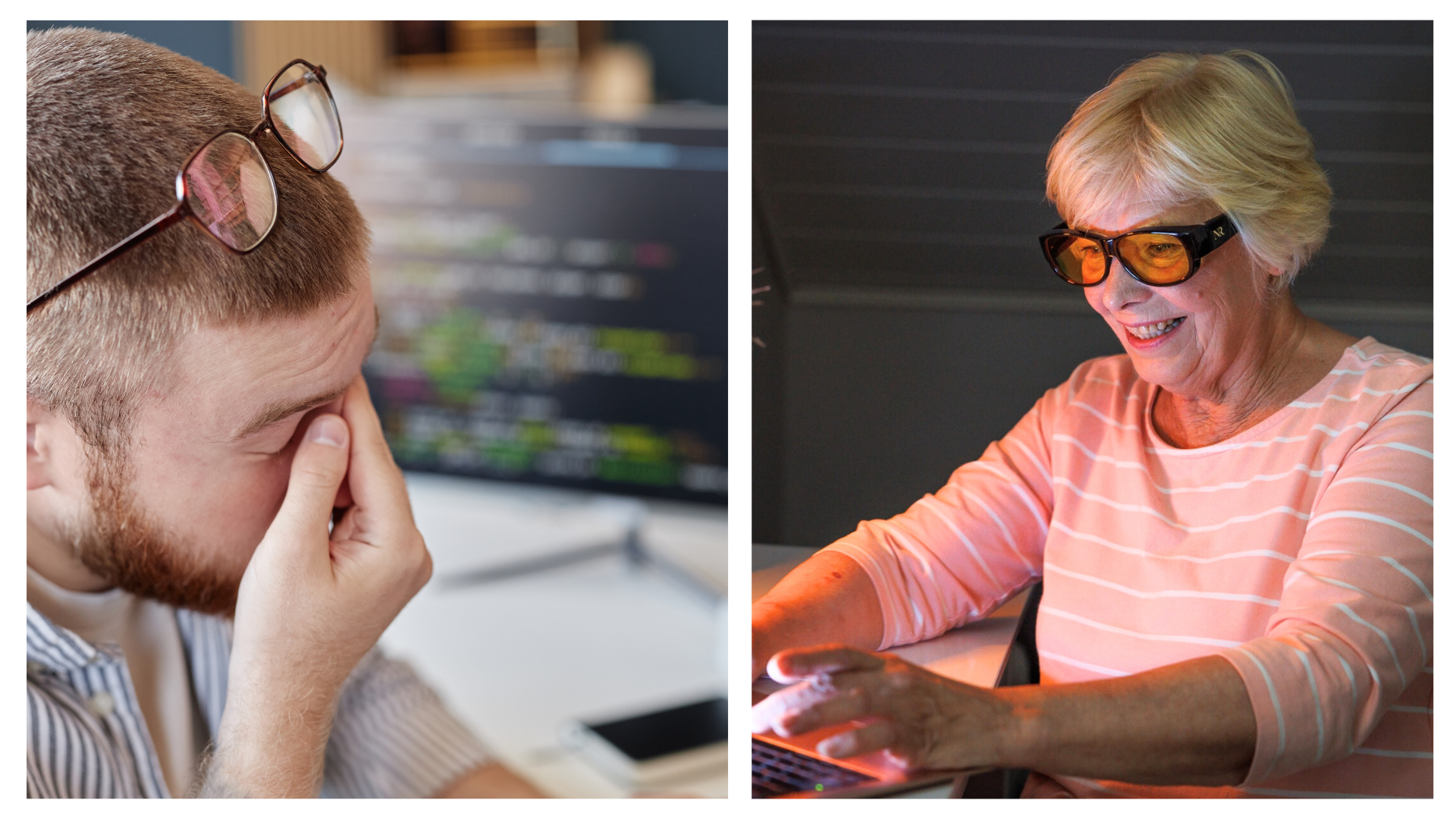

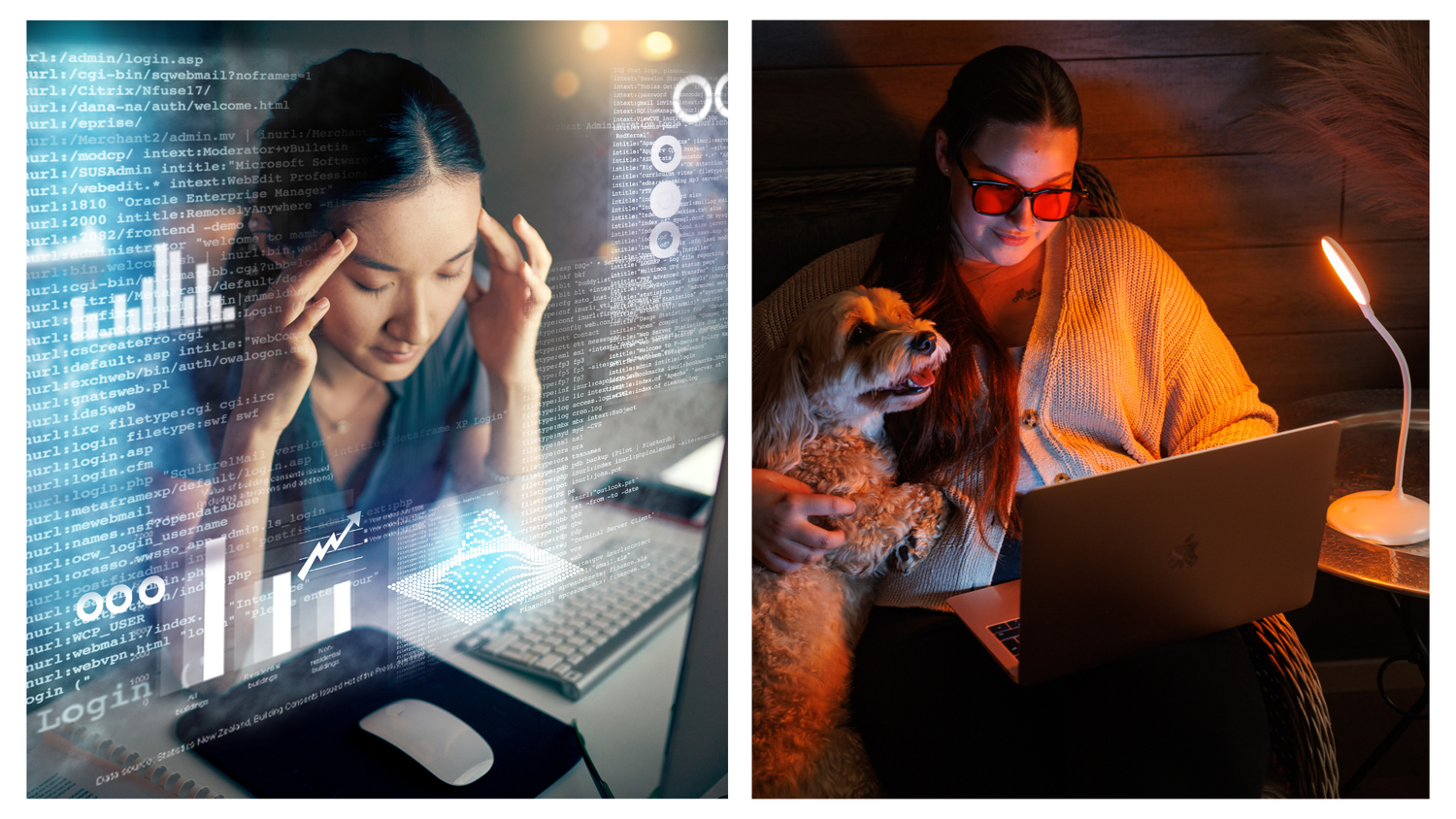
Light is important to all of us, but for people on the autism spectrum, it can be much more than just a way of seeing. It can be an experience, a feeling, or a sensory stimulus that either supports the flow of the day or makes it more difficult. Many describe bright LED lighting, flickering screens, and short-wavelength blue light as harsh, penetrating, or even felt throughout the body. This is not about exaggeration or oversensitivity, but about how the nervous system receives and processes light.
Sensory sensitivities are common on the autism spectrum, and light is one of the stimuli that can have a surprising impact on daily rhythm and well-being. When light is too bright or blue-light-dominated, it can increase restlessness, make it difficult to concentrate, and make the space feel overwhelming. Softer lighting, on the other hand, can bring peace, clarity, and a whole new kind of respite to the day.
Light affects the nervous system, but not all wavelengths do the same thing
LED screens and modern indoor lights contain a lot of short-wavelength blue light, which can feel sharp and dazzling. The nervous system reacts to this light more strongly than usual. In the evening, the importance of light is even more emphasized. If the environment remains bright and dominated by blue light until late at night, the body can remain in “day mode” just when it should be time to calm down. This can make falling asleep more challenging, especially for people whose nervous systems are already stressed or overly reactive.
A gentle light environment is not just a matter of comfort. It is a practical way to support nervous system balance and make everyday life a softer experience.
Practical aids for everyday life – gently and according to the situation
Not everyone wants or has the time to adjust their home's lighting throughout the day, nor do they need to. That's why many people use small, easy-to-use tools that make the light more peaceful without much effort.
During the day, even a slight softening can make you feel better if the sharpest part of the indoor lighting or the screens of digital devices feel overwhelming. For this purpose, day glasses with yellow lenses have been developed that reduce the sharpness of the light, but retain the natural brightness. The world does not get darker, but it feels softer.
In the evening, many people crave a clearer transition to calmness. Evening glasses with orange lenses can make this transition gentler, as they change the tone of the light to a warmer one, even when the lighting in your home remains bright or you are cozying up in front of digital devices.
In addition, completely blue-light-free evening lights bring a wonderfully gentle, warm atmosphere to the space. If the stress is caused more by the uneasiness of the light than by the brightness, help can be found by changing the light source itself. A flicker-free full-spectrum bulb makes the light more even and natural, which can be much easier on the nervous system.
These are not treatments, but small everyday tools that can be used to adjust the light to be gentler on the senses to the extent that feels right to you.
Even a small change can make a big difference
Many people on the autism spectrum describe that gentler lighting has been like a quiet relief. When sharp stimuli are reduced, there is room for peace, play, concentration and one's own rhythm. Light alone does not solve everything, but it is one of the few things that can be adjusted easily and where the effect is often felt quickly.
Our job is to make this adjustment as effortless as possible and offer wonderful products to support your everyday life.
Collaboration with the Finnish Autism Association
We want to be part of building environments where uniqueness is seen as an asset and where sensory diversity is taken into account. That is why we offer members of the Autism Society a special membership benefit, which is distributed through the association's internal channels. We hope that this will make a gentler light environment more accessible to those who can benefit most from it.
Gentler light. A calmer everyday life. Understanding for the senses.
This text is not medical advice. If you have any health-related questions, please consult a professional. The views presented in this article are based on general knowledge and experience about the impact of light on well-being.
Sources:
Autism Association. Senses. (19.4.2023). https://autismiliitto.fi/autismi/toimintakyky/aistit/
Autism Association. Sensory Activities. (31.1.2023). https://autismiliittoinmaa/aistitoinmaa/
Autism Association. Senses and relaxation. (3.9.2025). https://autismiliitto.fi/tuki-ja-neuvot/tukikeinot/aistit-ja-rentoutuminen/
Current treatment (Duodecim). Atypical sensory regulation in autism spectrum disorder. (23.1.2023). https://www.kaypahoito.fi/nix03217
Robertson, CE, & Baron-Cohen, S. Sensory perception in autism. Nature Reviews Neuroscience, 18, 671–684 (2017). https://doi.org/10.1038/nrn.2017.112
Blume, C., Garbazza, C., & Spitschan, M. Effects of light on human circadian rhythms, sleep and mood. Somnologie (2019). https://doi.org/10.1007/s11818-019-00215-x
Chang, A.-M., Aeschbach, D., Duffy, JF, & Czeisler, CA Evening use of light-emitting eReaders negatively affects sleep, circadian timing, and next-morning alertness. PNAS, 112(4), 1232–1237 (2015). https://doi.org/10.1073/pnas.1418490112
IEEE Std 1789-2015. IEEE Recommended Practices for Modulating Current in High-Brightness LEDs for Mitigating Health Risks to Viewers. (2015). https://25472181.fs1.hubspotusercontent-eu1.net/hubfs/25472181/PDF%20files/IEEE%201789%20-%20Recommended%20Practice s%20for%20Modulating%20Current%20in%20High-Brightness%20LEDs%20for%20Mitigating%20Health%20Risks%20to%20Viewers.pdf
American Academy of Ophthalmology. Digital Devices and Your Eyes. (December 5, 2025). https://www.aao.org/eye-health/tips-prevention/digital-devices-your-eyes